













A great success! From October 10-13, 2023, SCIO's Discrete Automation team was on the road at...
← SCIO Updates
More than autonomous technology: How usability makes the difference in daily AMR operation
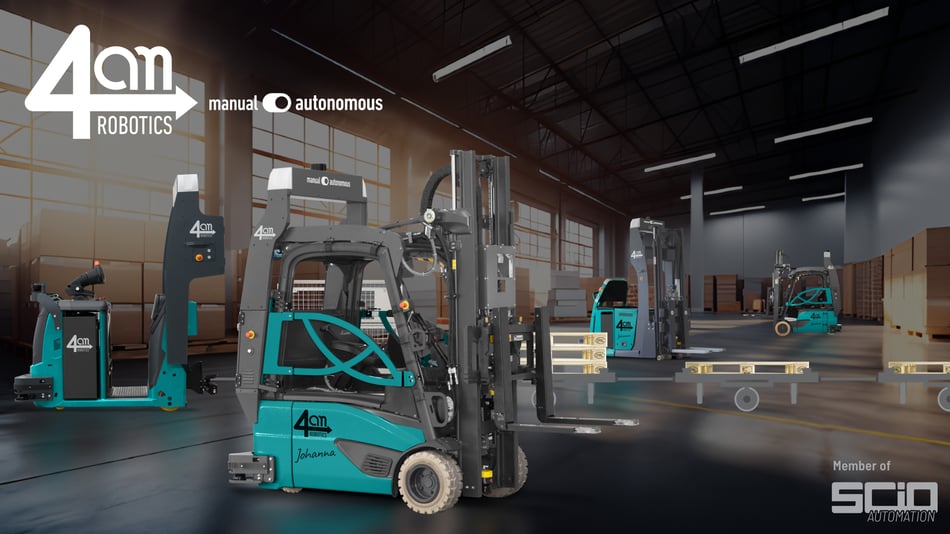
Anyone walking through modern production or logistics environments today will see them more and more often: autonomous vehicles that independently transport goods, pick up loads, and perform tasks that used to be done by forklifts or tugger trains with drivers. But behind this apparent simplicity lies a sophisticated interaction between the vehicle itself and the fleet management system that coordinates its operations.
While the technical performance of such systems is increasingly becoming standard in industry, another factor now determines efficiency and acceptance in operation: usability. How intuitively a system works, how easily malfunctions can be detected and acknowledged, and how well human-machine interaction is designed directly influences the success of automation.
Where the intelligence lies in the vehicle
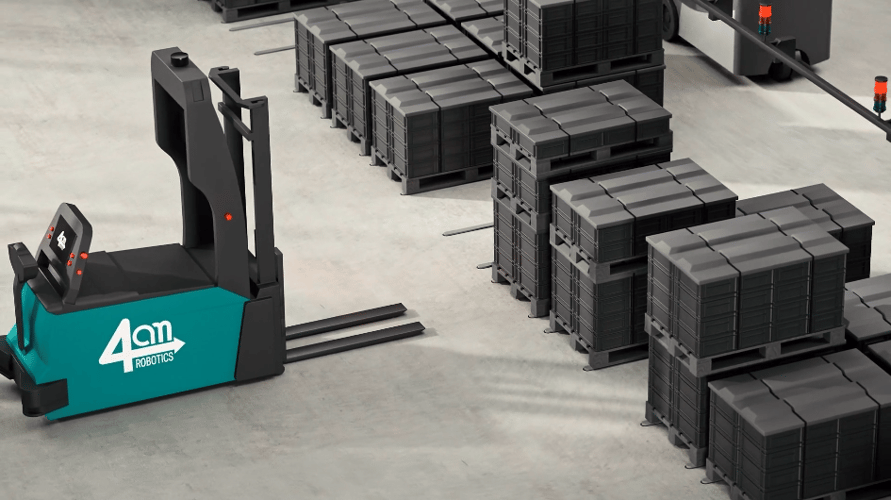
Autonomous mobile robots (AMRs) and driverless transport systems (AGVs) now perform significantly more tasks directly in the vehicle than was common just a few years ago. Thanks to modern onboard processors and a multitude of sensors, they make many decisions locally: they detect obstacles, adjust their speed, and initiate evasive maneuvers independently.
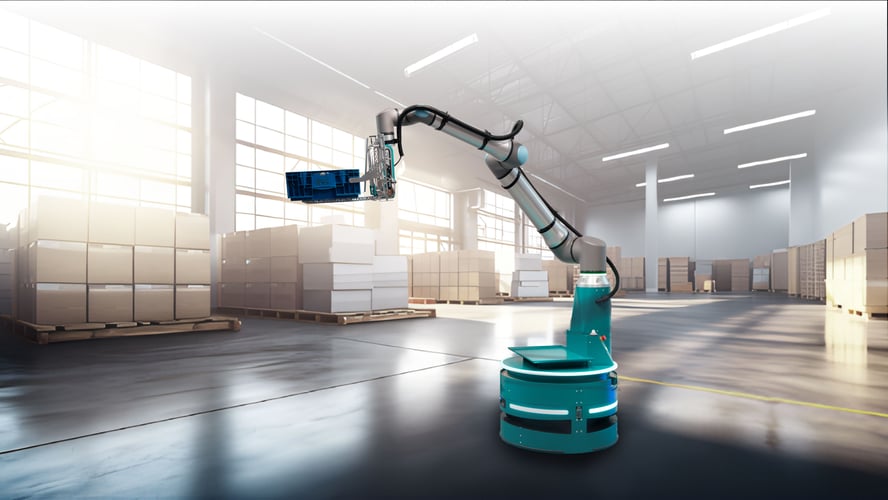
In vehicles such as those from 4am Robotics, 2D safety scanners and 3D cameras work hand in hand. While the cameras capture the space in three dimensions and identify objects precisely, the scanners monitor the floor area and reliably detect obstacles or people. The data from both systems is linked in real time, giving the vehicle a complete picture of its surroundings at all times.
This principle of “edge intelligence” – i.e., data processing directly in the vehicle – has a decisive advantage: it enables lightning-fast reactions in dynamic environments and ensures that safety is always guaranteed.
The fleet manager keeps track of everything
The fleet manager is the central authority that connects all vehicles, routes, and orders. While the vehicle itself reacts to its immediate surroundings, the fleet manager takes care of the “big picture”: What is the next logical mission? Which vehicle is closest or has sufficient battery power? And where could bottlenecks occur in the next few minutes?
However, fleet management systems can be more than just monitoring tools. They collect data from all vehicles, evaluate priorities, and dynamically adjust routes or orders—also taking into account energy consumption, traffic flow, and process priorities.
A key success factor here is VDA 5050 compatibility. This standardized interface enables different vehicles from different manufacturers to be operated via a common fleet management system. For operators, this means greater flexibility in system integration and future-proofing that goes beyond individual software platforms.
Usability as a success factor
Even the most sophisticated technology is of little use if the system is difficult to operate on a daily basis. That is why user-friendliness is becoming increasingly important. This is not just a matter of attractive interfaces, but also of clear processes:
- How quickly can operators recognize that a vehicle needs assistance?
- How easy is it to acknowledge a fault or manually adjust an order?
- What information is displayed in the control room and what is displayed directly on the vehicle?
This interaction is particularly crucial in heterogeneous fleets with different vehicle types and software standards. A good fleet management system visualizes malfunctions, battery or blockage statuses in a clear and understandable way and enables easy operation – often via touch interfaces or mobile devices.
Intelligent division of labor for greater efficiency
The optimal distribution of tasks between the vehicle and the fleet manager is a balancing act. The more the vehicle can do itself, the more autonomous it is – but the more complex maintenance and fault diagnosis become. The more centrally the fleet manager operates, the greater the transparency and controllability – but also the dependence on communication and data quality.
Practical experience has shown that the combination of local vehicle intelligence and central fleet control provides the best compromise between flexibility and control. Vehicles act independently in their immediate environment, while the fleet manager collects and visualizes data and takes care of strategic optimization.
This division of labor becomes even more efficient in open system architectures, such as VDA 5050: Vehicles can be easily integrated into customer-specific control or fleet management systems, where they can be coordinated with other AMRs or AGVs.
What this means for operations
For operators, this development means one thing above all else: greater transparency and less effort in day-to-day handling. A modern system detects malfunctions early on, automatically prioritizes tasks, and offers simple interaction options, for example via touchscreen or with clear instructions directly in the fleet dashboard.
Intuitive usability lowers the barrier to entry for new employees and reduces downtime. This makes automation efficient not only technologically, but also organizationally. Ultimately, it's not about how much intelligence is built in, but how easy it is to use.
Our conclusion
Autonomous vehicles and fleet managers are evolving together, and the interface between them is increasingly determined by usability. Systems that combine technology, standardization (such as VDA 5050), and user-friendliness create decisive added value: they make complex processes manageable and ensure that automation works efficiently in everyday life.