










A great success! From October 10-13, 2023, SCIO's Discrete Automation team was on the road at...
← SCIO Updates
Automation 2026: The Key Trends, Technologies and Opportunities for Businesses


“A year of disruption, innovation, and risk” – that’s how Gartner, a leading global research and advisory firm, describes the year 2026. A new dynamic is expected to emerge especially in industrial automation: in key sectors such as automotive, chemicals, machinery, logistics, and the food industry, developments are accelerating rapidly. The trends themselves are not new – AI, robotics, IoT, and digital twins have been with us for years – but now both direction and pace are shifting. Automation is moving from a nice‑to‑have to an absolute must‑have. This development is driven by geopolitical uncertainty, the shortage of skilled labor, and growing pressure for sustainable efficiency. What does this mean for companies in the U.S. and the EU? Which technologies will truly prevail and how can businesses set the right course today? In this article, we take a look at the central automation trends shaping 2026 and explain why now is the right moment to invest.
A technology boost across all areas
Will 2026 be the year when vision becomes reality? Artificial intelligence, robotics, and digital twins are no longer buzzwords – they are actively shaping industrial automation. According to analysts, around 82% of industrial companies view AI as a key growth driver, even though many remain cautious when it comes to implementation. Particularly exciting is agentic AI – systems capable of making independent decisions and optimizing processes on their own. Companies that dare to test these technologies now may secure the decisive edge.
“Things are becoming more tangible, more real – we’re seeing real solutions driven by manufacturers and actually tested by users in the field,” explains Hans-Peter Zobl, CTO at SCIO Automation.
He emphasizes that only those who try new AI approaches can unlock scalability and true competitive advantages.
This is exactly where SCIO comes in: with deep software expertise, AI‑based applications, and customized PLC programming, we make complex processes more predictable and secure. That includes our focus on predictive maintenance, where systems proactively provide data and AI detects anomalies early on. We also apply practical AI methods – such as large language models – throughout everyday engineering to speed up documentation, compare variants, and support analysis. The result? Less downtime, higher equipment availability, and a measurable contribution to sustainability goals. Curious for a real-world example? Take a look at our current predictive‑maintenance project.
Investment pressure: 2025 was a reset, 2026 is the ramp-up
In 2025, the industry hit the brakes: recession concerns and geopolitical uncertainty led to restraint. But 2026 has the potential to change the picture – government incentives in the U.S. (re‑industrialization), digitalization initiatives in Europe, and the pressure to remain competitive are generating new momentum. Now the message is: invest rather than wait. Retrofit projects are becoming increasingly important: existing systems are modernized, control technology and software are upgraded – a sustainable alternative to new construction.
This is where experienced partners prove their strength: SCIO brings aging systems into the future – from planning to execution to recommissioning. Lower costs, increased efficiency, and ESG goals in focus. Whether greenfield or brownfield: we stand by your side as a reliable partner.
Automation as the central competitive advantage
In 2026, automation is no longer just about improving efficiency – it has become a central lever for competitiveness. According to a Deloitte study, most manufacturers expect smart manufacturing to be one of the most important drivers over the next three years – enabling higher productivity, increased output, and additional capacity. After recent supply‑chain crises, companies are focusing more heavily on resilience: 84% say they are actively looking for new technologies and partnerships to reduce global risk and bring production closer to home – though investment decisions remain cautious.
“Automation is the key to bringing value creation back while remaining flexible. Those who invest now secure not only efficiency but also independence,” emphasizes Antonio Cavotta, Executive VP SCIO Automation Business Segment Production Solutions.
Standardized automation packages and intuitive user interfaces can help lower initial barriers – even for companies automating for the first time or those that have hesitated until now. This is why SCIO supports its partners every step of the way: whether turnkey solutions or customized system integration – we act as a reliable technology partner from planning to after‑sales service. Our goal: automation that optimizes processes, strengthens sites, and creates long‑term competitive advantages together.
Industry 5.0: Automation with responsibility
In the EU especially, Industry 5.0 is coming into focus – the idea of aligning technological innovation with human needs and sustainability. Automation should relieve employees, not replace them. Retrofit instead of new construction, energy optimization, and reduced waste are becoming new business cases. In 2026, successful companies emphasize both productivity and employee satisfaction or workplace safety through automation.
Digital transformation toward Industry 4.0 may not yet be fully realized everywhere, but Industry 5.0 builds on the progress made – and adds new dimensions instead of replacing it.
At SCIO, we incorporate these principles into every solution: from energy‑efficient material flows to autonomous mobile robots (AMRs) that enhance safety, ergonomics, and efficiency. Our AMR solutions, such as autonomous tugger trains, clearly demonstrate the concrete and measurable benefits these principles offer:
|
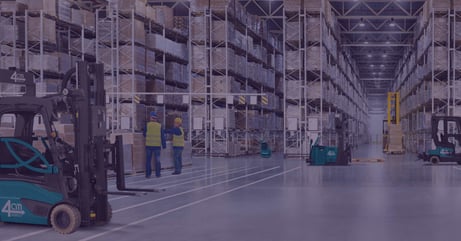 |
Heinz Scheungrab, Head of SCIO Business Segment Mobile Robotics explains: “AMRs are more than transport helpers – they take over repetitive tasks, reduce emissions, and relieve employees both physically and mentally. This is how automation becomes a true team player for people and the environment.”
Conclusion: 2026 – Automation becomes an absolute must-have
Resilience and agility are the two pillars companies need in an uncertain global economy. Despite geopolitical risks and economic weakness, many companies plan to increase their automation investments – often carefully and with different regional focuses:
Overall, the outlook is cautiously optimistic: many companies hope that the projects initiated during the crisis years will begin to show results from 2026 onwards. Automation is shifting from a nice‑to‑have to an absolute must‑have — provided companies overcome investment hesitation. Because one thing is becoming increasingly clear — despite, or precisely because of, challenging conditions: those who fail to invest now risk falling behind.
Start your automation strategy today — get in touch with us and let’s make your processes future‑ready together.